Loading...

ARTICLE CATEGORY:

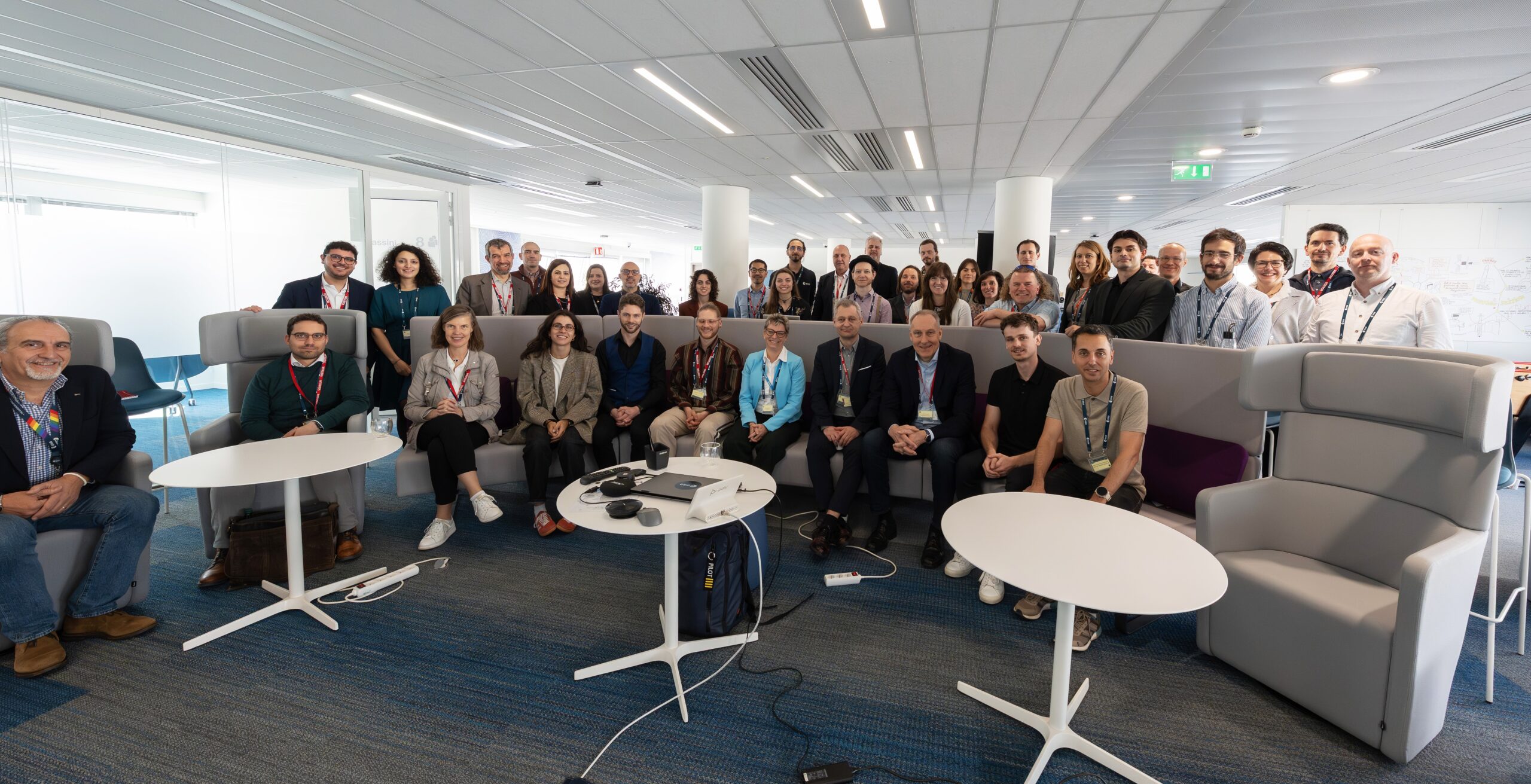
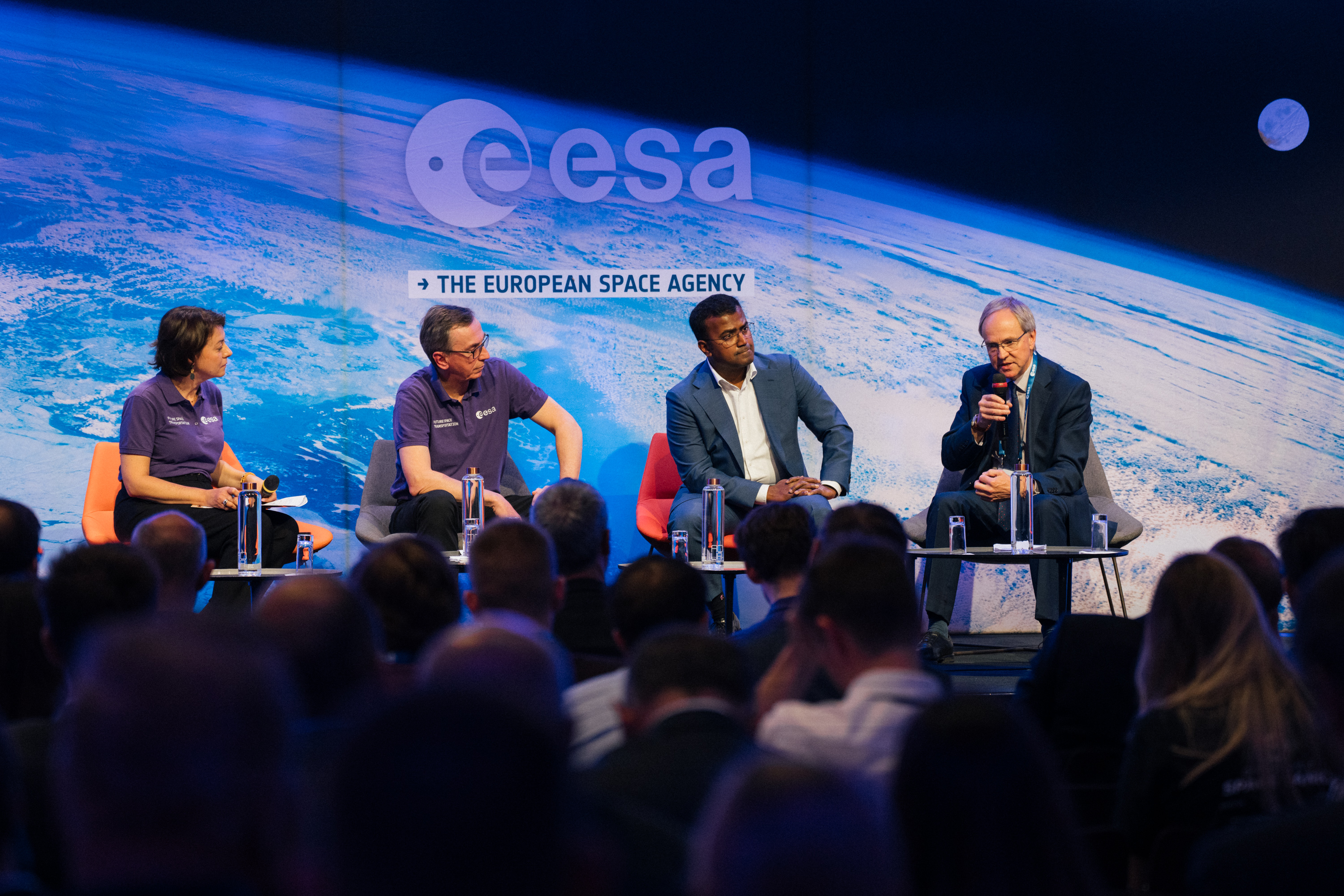
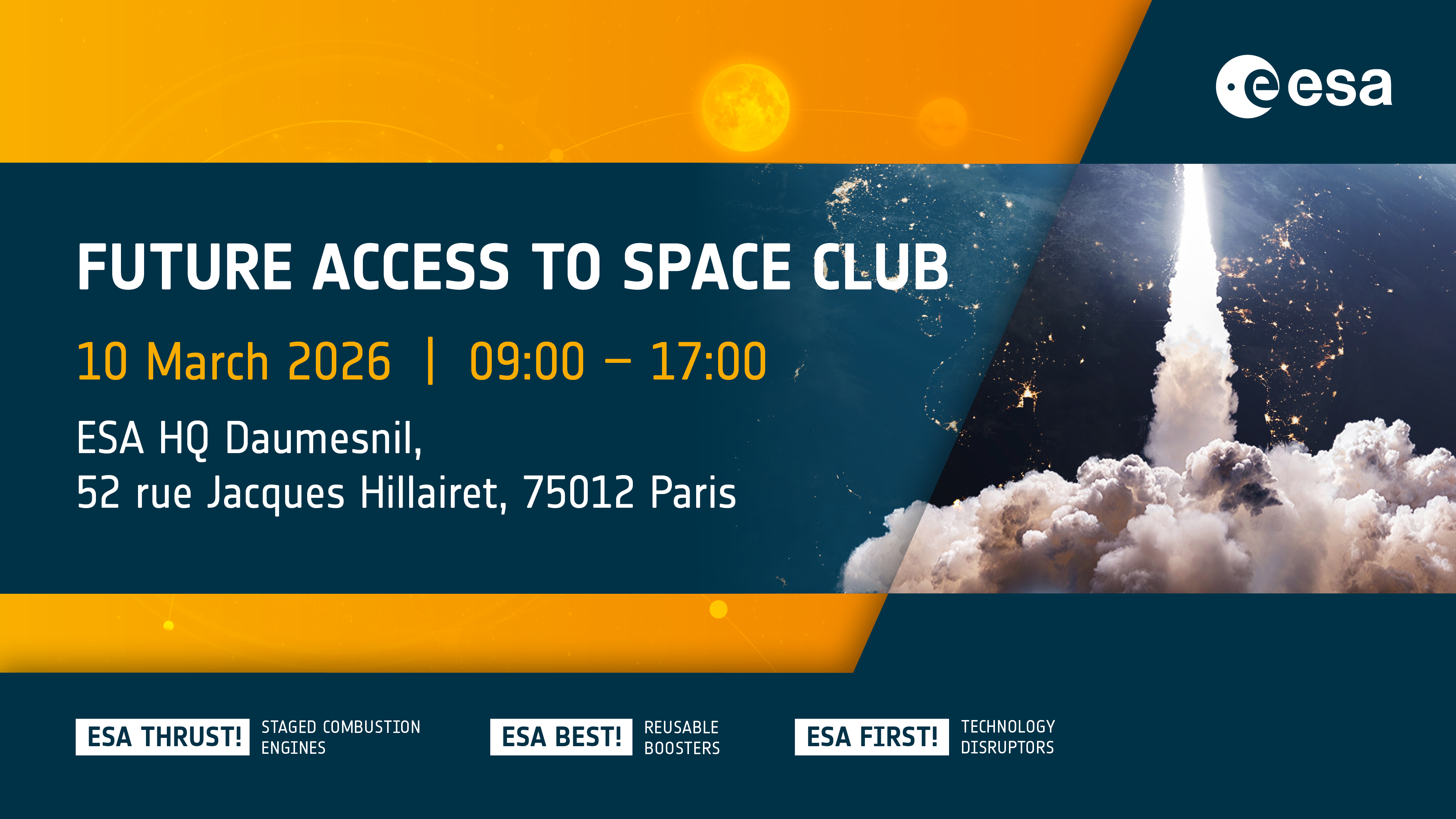
As launcher programmes advance across Europe, coordinating shared technical priorities is becoming a defining feature of how future access to space capabilities are being shaped. On 10 March, nearly 70 representatives from across the launcher value chain gathered at ESA HQ Daumesnil for the second Future Access to Space Club session. Hosted by FLPP, ESA’s programme for future space transportation, the event brought together industry participants, infrastructure operators, institutional stakeholders, new launcher entrants and specialised subsystem suppliers to discuss technical topics linked to ongoing launcher challenges across the continent.

Building on the momentum of the inaugural meeting, where ecosystem growth and shared ambitions took centre stage, the focus of this session was on implementation-related themes: safety approaches, propulsion testing activities and access to productivity-boosting facilities in the context of evolving launcher programmes across Europe.

“I believe this Club answers a real expectation of the launcher business companies. ESA is creating value in organising such events,” said Jean-Noel Caruana, FLPP programme manager at ESA Space Transportation directorate.

DSC02481
PlayPause
previous arrowprevious arrow
next arrownext arrow
Shadow

Flight safety integration and shared engineering challenges

With launcher initiatives diversifying across Europe, compatibility between new systems and operational environments is increasingly being examined within broader engineering discussions. A dedicated session on autonomous flight termination systems addressed safety architectures, trajectory monitoring approaches and integration considerations relevant to current launcher development activities. Progress was presented on three FLPP FIRST! projects, led by SENER (Spain), GMV (Poland) and Qascom (Italy), and a complementary development from Thales Alenia Space Belgium, focusing on low-cost and reliable autonomous flight termination systems. The projects are developing hardware and software validated through hardware-in-the-loop testing, targeting TRLs 4-6.

Bringing launcher, spaceport and AFTS representatives together at the Club helped start a discussion about how they will work together to meet the range safety requirements, and get regulatory approval. The need for flight test data and the challenges of dealing with different approaches to flight safety regulation in each country were also highlighted.

Ground testing infrastructure emerged as one of the session’s most substantive topics. Providers from across Europe – from newer commercial sites such as Latitude’s TITAN centre at Paris-Vatry to established institutional facilities including DLR Lampoldshausen – presented proposed capabilities and discussed how access is being coordinated alongside growing development demand. ESA confirmed that its P3.1 test position at Lampoldshausen will return to service this summer, and presented a study on adapting P5 for high-thrust engine testing up to 2.5 MN.

Strategic drivers informing technical exchanges

The session also reflected how broader strategic factors are increasingly part of engineering discussions across Europe’s access to space community. Dual-use considerations featured prominently, with representatives from MBDA, Dassault, Avio and Indra Deimos contributing to a dedicated exchange. Launcher system development was discussed in relation to potential operational requirements such as responsiveness, mission assurance and deployment flexibility – a conversation that is becoming more relevant as European launcher programmes approach qualification and early operational stages.

Participants also identified artificial intelligence as a topic warranting more structured attention in future FLPP activities, with interest spanning trajectory optimisation, predictive maintenance and the use of advanced simulation in planning complex test campaigns.

As European launcher initiatives move towards early operational stages and beyond, platforms such as the Future Access to Space Club are providing the conditions for more coherent coordination across the community. Through a format that combines structured thematic sessions with private B2B exchanges, ESA is supporting interaction and knowledge-sharing across Europe’s access to space community in ways that complement its funding and technical support roles.

The third session of the Future Access to Space Club will take place alongside the FLPP Autumn Session in October 2026.
ARTICLE CATEGORY:

The European Space Agency’s programme for future space transportation, FLPP, brought together 230 onsite participants from 23 European countries in Paris for its Spring Session on 9 March, with more than 250 additional participants following online. The largest gathering in the programme’s history, with interest exceeding available places, the session offered a clear view of a European space transportation community already engineering the capabilities it will depend on in the coming decades. 

Opening the day, STS Senior Advisor Jérôme Breteau noted the trust Member States place in ESA. “Space is now clearly recognised as a strategic domain,” he said. “Programmes like FLPP are essential to transform political ambition into programmes, and programmes into technology.” 

Head of FLPP Pier Domenico Resta reinforced the role of FLPP: “Our role is to implement industry’s many great ideas in the best possible way,” he said, expressing confidence that the programme is on track to deliver these capabilities. 

slide 1
ESA FLPP Team
previous arrowprevious arrow
next arrownext arrow
 
Shadow

Throughout the session, exchanges between industry, ESA and Member State representatives reflected a changing operational context for space transportation. Reusable launch systems, in-orbit mobility and logistics capabilities are increasingly treated as strategic infrastructure, supporting both civil and defence needs. Servicing spacecraft, refuelling assets in orbit and sustaining operations over time are becoming central to Europe’s autonomy and resilience in space. 

FLPP is already operating within this reality, enabling the alignment of technology development with the emerging operational requirements of both institutional and commercial users. 

A widening industrial and institutional circle

Discussions also illustrated how the European SpaceTech community continues to expand. Hungary and Luxembourg, two of the four newest members, presented their national objectives and stakeholders during the event. They join Greece and the United Kingdom as the newest members of the FLPP network, bringing the total to 18 countries participating in the programme

“FLPP has opened the door to exploration and in-space activities beyond traditional satellite communication,” said Bob Lamboray, Senior Manager Lead for Exploration & Space Resources at the Luxembourg Space Agency. He added that the motivation for joining FLPP was to “develop and diversify the national space industry. We believe that commercial utilisation of space transportation technologies is a key element in growing an industry and enabling companies to succeed in the long term.” 

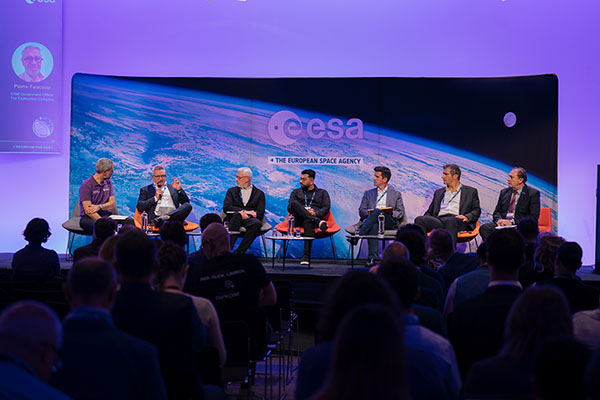
Industry perspectives shared during the defence-focused panel reinforced this. Victoria Carter-Cortez, Business Development Manager at in-orbit servicing company Astroscale, said, “The joint perspective of industry and institutions is essential if we want to move forward. Dual-use technologies bring diversified revenue streams, but they also create opportunities to grow core capabilities.” 

The panel brought together representatives from Member State delegations and industry to discuss the economic and strategic benefits of dual-use technologies. The discussions confirmed the importance of the topic, while work towards aligning priorities across the community continues. 

“Many of the fundamental building blocks are the same regardless of whether applications are civilian or defence-related,” she continued. “What matters is the evolving operational mindset and the continuous dialogue that allows industry to mature technologies to higher readiness levels.” 

Colonel Marcin Mazur, Vice President at POLSA, the Polish Space Agency, stressed that “it’s important to be prepared … the key is to invest in capabilities that could be used for both civilian and defence purposes,” and the usage of those capabilities are decided by the end user. 

Technologies advancing through industrial delivery

Project presentations across the programme demonstrated how FLPP is translating into technological progress. Updates shared throughout the day showed development work advancing across propulsion systems, composite structures, avionics, autonomous operations and in-orbit logistics technologies. 

Several companies described how concepts initially proposed through open calls are progressing with ESA’s support, highlighting how the FLPP team supported them in overcoming technical setbacks and refining designs, which has been integral to moving from promising prototypes towards validated commercially-attractive hardware and system demonstrationsThe technologies supported by FLPP are now winning commercial contracts beyond Europe: at the event, Spanish company Arkadia Space announced a recent contract in the United States alongside existing European ones. 

The session also recognised eight projects through the FIRST! Sustainability Awards, highlighting technologies contributing to more environmentally responsible space transportation and reflecting the increasing integration of sustainability into industrial development. 

FIRST! Sustainability Award: tecnalia
previous arrowprevious arrow
next arrownext arrow
 
Shadow

In-space capabilities

The expansion into in-orbit transportation and logistics capabilities featured prominently throughout the event, including a dedicated panel on coordination between ESA and the European Commission on in-space servicing, assembly and manufacturing (ISAM) and the EU’s ISOS initiative. 

Tiago Soares, Head of ESA’s Clean Space and Circular Economy Office and Chair of the Agency’s ISAM working group, described the scale and opportunities in ISAM. “ISAM is truly transformational,” he said. “It is multi-actor, multi-purpose and multi-element. We are working together to define a European vision that will change how we think about sustainability in space, how value chains evolve and how assets already in orbit can be used in new ways.” 

Panel discussions showed how launch capabilities are now complemented by sustained in-orbit mobility and servicing architectures. Dual-use considerations and ISAM development pathways are key to supporting technology priorities and industrial participation.  

Technologies under development through FLPP’s In-Space Proof-of-Concept (InSPoC) activities – including rendezvous and docking systems, cryogenic refilling solutions, autonomous operations and containerised cargo concepts – form part of this emerging area. 

A programme in motion across Europe 

By the close of the session, the scale of FLPP activity across Europe’s SpaceTech community was unmistakable. Participation continues to grow, technologies are advancing across multiple domains, and industrial collaboration is increasingly focused on autonomy, resilience, and sustained activity in orbit. 

Described by Kate Underhill, THRUST! Project Manager, as “the place to be for future space transportation in Europe”, the FLPP community will next gather in Paris on 14 October. 

PIAP Space
Project: RAVEN
PlayPause
previous arrow
next arrow
PIAP Space
Pangea Propulsion
PERMATHRUST
Lios
EcoDeltaV
Qascom
GKN Aerospace Sweden AB
The Exploration Company
Sener
ArianeGroup
GMV
ArianeGroup
previous arrow
next arrow

Click the images to view project portfolios. See more project portfolios here.

ARTICLE CATEGORY:


The ESA Future Access to Space Club brings together a select group of European actors involved in access-to-space activities for focused exchange and collaboration. Session #2 continues the dialogue between ESA and industry on shared priorities, emerging needs, and practical ways to move forward together. 

Agenda

09.00-09.30 Welcome and coffee
09.30-09.40 ESA introduction
09.40-10.55 Session on AFTS : pitches + round table
10.55-11.10 Coffee break
11.10-12.10 Session on engine testing : pitches + round table
12.10-12.20 ENLIGHTEN presentation
12.20-13.45 Lunch
13.45-14.45 Session on dual use : round table
14.45-15.30 Open discussion in round table
15.30-15.45 Coffee break (open ended during B2B)
15.45-17.00 B2B sessions – 5 sessions / 15 minutes each
17.00 Wrap-up


Accommodation & Transportation

ARTICLE CATEGORY:

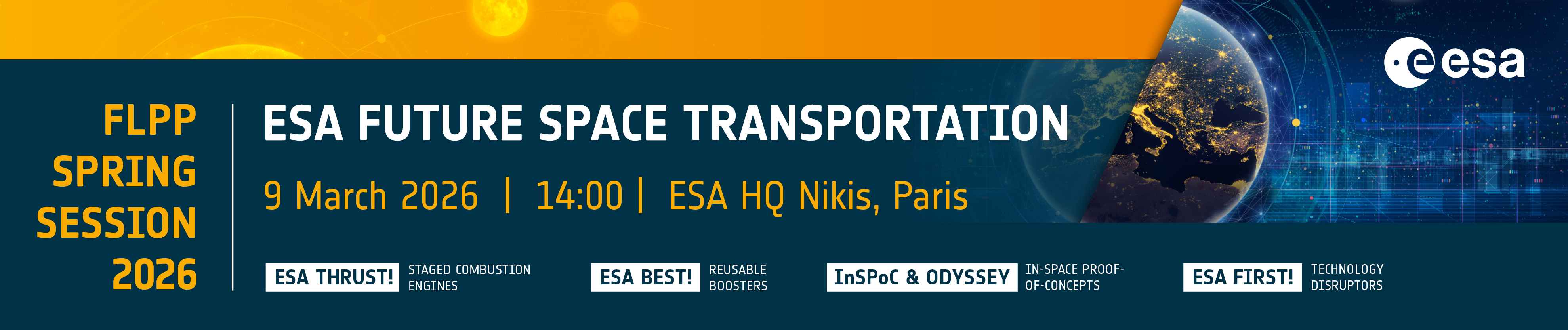
Future Space Transportation Spring Session draws record attendance - read more

The ESA Future Space Transportation Spring Session brings together ESA, industry, investors and Member State delegates to review progress across Europe’s space transportation activities. Now in its fourth edition, the Session has become a fixed point in the European space transportation calendar.

Agenda

14:00 CM25 key outcomes and next steps
14:15 New perspectives from FLPP Member States: integration into the ecosystem
14:45 Dual-use advancement in in-space transportation
15:30 Break
16:00 FLPP at a glance: programmes and progress
16:20 Technology in practice: turning concept into capability
17:00 FIRST! Sustainability awards
17:35 Break
18:00 From contract to impact: industry success stories
18:45 ESA-EU ISAM/ISOS coordination: programmes, roles and alignment
19:15 FLPP process and open calls
19:30 Closing remarks and networking cocktail event
23:00 End of event

Accommodation & Transportation


ARTICLE CATEGORY:

Last week in Paris at Salon de l’Aveyron, the European Space Agency’s programme for future space transportation, FLPP, united the European space industry once again with its Autumn Session, reflecting a programme that is a key strategic enabler of space transportation technology development. The space transportation community spoke with clarity and conviction – FLPP is where the future of European space capabilities is being built today.  

With more than 220 participants on site and many more following online, the pride and confidence in the programme’s progress were unmistakable. Returning players greeted each other enthusiastically and newcomers were welcomed with open arms. Each iteration of the twice-yearly session grows in size and scope, reflecting how firmly FLPP has become established as a strategic enabler of Europe’s space transportation capabilities. 

slide 1
ESA FLPP Team
ESA FLPP Team
previous arrowprevious arrow
next arrownext arrow
Shadow

Conversations about engines, demonstrators, and in-space operations reflected the growing maturity of the approach: technically disciplined, commercially motivated, and coordinated across borders and sectors. Panellists from start-ups, large system integrators, national and European agencies, and Member State delegations described how ESA provides the structure that makes such collaboration possible -through demonstrators, minimum viable products (MVPs), and a rapid development model that manages risk while maintaining progress.  

ESA’s Director of Space Transportation, Toni Tolker-Nielsen, and Jérôme Breteau, Head of Future Space Transportation, opened the event by reinforcing FLPP’s strength in connecting Europe’s industrial capability, national ambitions, and ESA’s long-term strategy. FLPP ensures new technologies mature in step with market needs and future missions.

“We are putting Europe in the driving seat,” Breteau said, setting the tone for a day shaped by confidence in Europe’s collective direction. 

For industry, this has created space to think bigger. “ESA gave us the freedom to explore, innovate, and contribute our own ideas,” said one participant. Christian Bauer of DeltaOrbit added that FLPP “gave the team confidence that we can do this – and that we’re on the right track.”

That sense of confidence in ESA’s direction rang through the day. As a strategic enabling programme, it has become a mirror in which European companies see themselves reflected in the future they are helping to build. 

For the first time in these sessions, a panel focused on dual-use and defence applications of space technology, and how the technologies developed under the programme will be crucial to safeguarding Europe’s future. Industry speakers and a representative from the Polish Space Agency reinforced how autonomy, mobility, and resilience are essential for both civil and defence applications, and that collaboration through ESA helps Europe prepare for both. 

That future was visible in the results. Two new projects in in-space transportation were recognised for their achievements. The Exploration Company signed a contract to advance InSPoC-1 into its consolidation phase for in-space docking technologies. PIAP Space signed a contract for the first demonstration mission under the RAVEN programme, which will test in-orbit transfer, approach, and controlled de-orbit manoeuvres.

slide 1
PIAP Space
PIAP Space receives an award at the FLPP Autumn Session.
PIAP Space has signed a contract for the first demonstration mission under the RAVEN programme, which will test in-orbit transfer, approach, and controlled de-orbit manoeuvres.
previous arrowprevious arrow
next arrownext arrow
Shadow

These advancements highlight how FLPP continues to strengthen Europe’s capabilities across every phase of the journey – from access to orbit to in-space logistics and return. Each milestone is part of a broader design: an interconnected ecosystem of technologies and actors ready for operational use. 

That future is also not far off – FLPP’s model of incrementally demonstrating Minimum Viable Products, or MVPs, ensures marketable products quickly. Instead of spending years developing an expensive spacecraft, this incremental approach is key to ensuring marketable outcomes while advancing Europe’s overall capabilities in space technology.  

Member State representatives echoed that trust. Delegates described FLPP as reliable, responsive, and closely aligned with their priorities. One noted how “whenever we had problems, it was easy to solve and overcome them,” while another said the programme “helped us gain time” and opened opportunities for national industry, including in defence markets. Their remarks reflected a shared view: ESA delivers because it works collaboratively, supports national industries, and keeps Europe moving as one. 

Throughout the day, cooperation remained the steady theme – across borders, systems, and disciplines. Breteau reminded participants that “it’s important that the this endeavour goes on,” in a call for continuity. The community now gathered sees itself as part of a longer arc, where Europe’s capabilities are not only advancing but converging. 

As the Ministerial Council approaches, the message is unmistakable. FLPP is not a programme on the rise; it is the foundation of Europe’s future in space transportation – a place where technical achievement, commercial logic, and strategic coordination already meet. The future is being built here, and it is already taking shape. 

ARTICLE CATEGORY:

Europe’s launch sector is undergoing a rapid transformation to meet the growing and diverse demand for access to space. Last week, amid these shifting dynamics, ESA invited the European space transportation industry to the first session of the FLPP Access to Space Club at ESA Headquarters Daumesnil in Paris. 

The Club, enabled through ESA’s programme for future space transportation, FLPP, drew more than 80 participants from 12 countries. Industry participants welcomed the occasion to hold cross-cutting discussions and exchanges among peers, creating opportunities for cooperation in parallel to competitive projects. With this forum, FLPP reinforces its position as an enabler to facilitate the industry initiatives that contribute to transforming Europe’s future in access to space capabilities. 

The atmosphere was constructive, with room to exchange experiences and expectations.

“The FLPP Access to Space Club has put together actors sharing their expectations, ambitions, and experiences in the field”, said Emanuele di Soto, Flight Segment Products Manager at GMV. “This has generated a very constructive environment for discussion on several hot topics suggested and moderated by ESA officers that I have found extremely interesting”. 

DSC02481
PlayPause
previous arrowprevious arrow
next arrownext arrow
Shadow

With the global space market growing more competitive, Europe aims to innovate faster, industrialise more efficiently and drive costs down. Participants at the club session pointed to several priority stakes that will shape the sector in the years ahead:   

  • acceleration of innovation and demonstrations,  
  • balancing speed with efficient allocation of investments and resources,  
  • the mutual reinforcement of space and non-space business,  
  • potential development of artificial intelligence at all steps of activities, and 
  • how to efficiently pursue European priorities of safety and sustainable activities in a competitive context. 

“I look forward to attending the next sessions and particularly to discussing new European players in access to space, industrialisation and the potential for dual use adaptation”, added Emanuele di Sotto.

The Club also demonstrated how Europe’s access to space community is widening. Alongside established primes and equipment manufacturers, participants included start-ups and companies that bring expertise from beyond the space sector. Advanced manufacturing specialists, for example, are applying their know-how from the automotive industry to enable faster production cycles and lower costs. Their presence showed how Europe can draw strength from diverse industrial capabilities. 

“With this club, ESA Future Space Transportation promotes acceleration and growth of the business of access to space. There is a case for increasing the supply of launchers in Europe. To make this happen, we want to derisking critical paths and help solve issues of mutual interest”, said Jean-Noël Caruana, FLPP programme manager.  

The constant aim of FLPP is to prepare European companies for future endeavours: to nurture a robust and healthy ecosystem, able to generate value in open and competitive frameworks. 

“That means, for example, highlighting and addressing bottlenecks – such as access to testing solutions; helping suppliers have access to requirements from primes – so that they can identify the sweet spots of their product design; addressing compelling cases for united action – such as artificial intelligence”.  

The FLPP Access to Space Club will also help FLPP convene, coordinate and align with the European space transportation network, ensuring that industrial perspectives feed directly into ESA’s roadmap and procurement cycle, from early ideas to Invitations to Tender. This helps guide technology derisking and demonstrations. ESA outlined directions, presenting the three main initiatives driving future access-to-space pillars in FLPP:  

  • THRUST! for staged combustion high-thrust engines,  
  • BEST! for future reusable launch systems,  
  • FIRST! for disruptive technologies. 

ESA and industry will work together on connecting these initiatives to rapid pathways for industrialisation and commercialisation.  

The FLPP Access to Space Club will meet twice a year, alongside the Future Space Transportation Spring and Autumn Sessions. This rhythm will give Europe’s launcher and propulsion community a regular platform to align strategies, exchange perspectives and maintain momentum.

ARTICLE CATEGORY:

With key projects advancing and CM25 on the horizon, the Future Space Transportation Autumn Session sets the stage for the next phase of European space transportation.

Hosted by the European Space Agency, this event brings together Member State delegations and the wider European space transportation community to feature project updates, in-depth discussions and networking opportunities to foster a strong, cohesive and competitive European space transportation market.

Watch live on ESA Web TV Two

Agenda

13:00 Doors open
13:30 Welcome coffee
14:00 ESA’s vision for space transportation
14:10 Overview of FLPP initiatives and 6-month summary
14:30 ESA in the competitive landscape
15:00 Coffee break
15:30 Enabling synergies: FLPP’s role in linking the value chain
16:05 Next phase of preparation for Access to Space
16:45 Working together across end-to-end space transportation to promote dual use
17:30 Coffee break
18:00 How to work with ESA Future Space Transportation
18:15 Working with ESA Future Space Transportation
18:55 Closing remarks and next steps
19:15 Networking and cocktail event
23:00 End of event

Event Logistics

Restaurants near the venue

Transportation and Accommodation

ARTICLE CATEGORY:


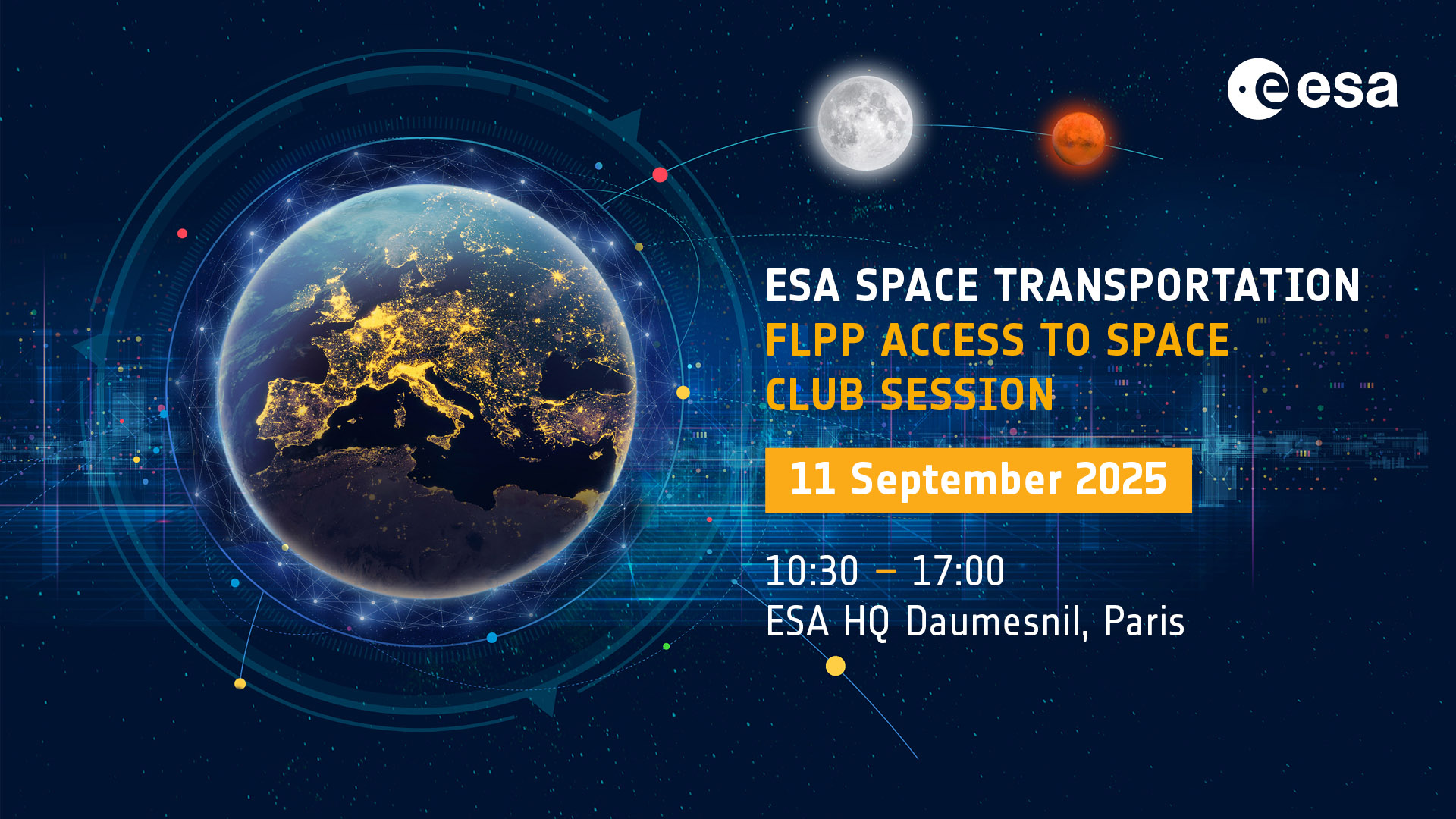
On 11 September 2025, the European Space Agency will host the Access to Space Club Session – a dedicated event for commercial propulsion and launcher developers to exchange needs, constraints, and strategic priorities.

The session is part of FLPP, ESA’s programme for future space transportation, which supports a connected and commercially competitive space sector across Europe.

It brings together industry participants to connect around the FIRST!, THRUST!, and BEST! initiatives, covering high-thrust propulsion, reusable boosters, and sustainable launch system architectures. 

Morning Session

The morning will feature a look into FLPP’s perspectives for 2026 – 2028 and pitches from selected participants.

Afternoon Session

The afternoon will feature working groups and 1:1 meetings with targeted discussions with the European SpaceTech industry on current challenges, future mission needs, and areas for alignment. Opportunities for 1:1 meetings between industry participants and with ESA will also be provided. 

Preliminary Agenda

9:30 – 10:30 Doors Open
10:30 – 11:30 Status of BEST!, THRUST! and FIRST! initiatives
Perspectives for 2026–2028
11:30 – 12:30 Selected pitches featuring innovative ideas from access to space initiatives
12:30 – 14:00 Lunch & Coffee
14:00 – 15:00 Exchanges on stakes and challenges for 2026–2028
15:15 – 16:45 1:1 B2B & B2ESA sessions
16:45 – 17:00 Conclusion

CONTACT FLPP


    * Mandatory field

    CONTACT BOOST!

      * Mandatory field

      CONTACT SPACE RIDER


        * Mandatory field