Loading...

ARTICLE CATEGORY:

The European Space Agency (ESA) will host the fifth session of its In-Space Transportation Club on 23 June 2026, bringing together Europe’s growing in-space ecosystem for a morning of strategic updates, technical collaboration and future planning.

The event will take place online from 09:30 – 12:00 CEST and the session will highlight the rapid progress being made across Europe to establish a shared and interoperable framework for in-space activities, from rendezvous and docking to refilling and orbital logistics.

As Europe accelerates efforts to build a sustainable orbital economy, coordination is intensifying across ESA Directorates and programmes, the European Commission and its ISOS ecosystem, as well as the wider SpaceTech industry spanning customers, operators and service providers.

Hosted by ESA’s In-Space Proof-of-Concepts (InSPoC) programme, the In-Space Transportation Club serves as a collaborative platform for the European SpaceTech community to exchange expertise, align developments and shape the future of in-space infrastructure.

Participants will gain:

  • an overview of Europe’s coordinated approach to In-Space activities through the ISA Working Group, co-chaired by ESA’s OPS and STS Directorates.
  • first access to the results of ESA’s Spacecraft Servicing Interfaces Taskforce.
  • insight into the first release of Open Interface Requirements Documents (IRDs) for rendezvous, docking and refilling interfaces.
  • updates on the implementation roadmap through ESA’s InSPoC and Odyssey programmes.
  • a preview of the evolution of the In-Space Transportation Club into the broader “In-Space Club,” expanding its scope across all in-space activities.

The Club session agenda will include:

ESA ISAM Working Group introduction

The ISAM Working Group is ESA’s cross-directorate initiative designed to strengthen synergies and coordination on In-orbit Services, Assembly and Manufacturing initiatives. Upcoming milestones, events and collaboration opportunities will also be presented.

Interoperability Framework and Roadmap

ESA’s Spacecraft Servicing Interfaces Taskforce will present the interoperability framework, toolbox and roadmap toward convergence on shared servicing framework and interfaces.

Open IRDs for Rendezvous, Docking and Refilling

Status and way ahead for InSPoC-1, together with the release of open IRDs for the enabling interfaces for Rendezvous, Docking and Refilling, promoting modularity and interoperability, non-proprietary and free of Export Control.

The next evolution: The In-Space Club

The session will conclude with a first look at the upcoming evolution of the In-Space Transportation Club into the In-Space Club, reflecting the full scope of Europe’s In-Space activities.

The Club session is open to tech providers, operators, research organisations, primes and investors wishing to collaborate on the future of European space transportation.

As the European orbital economy continues to evolve, collaboration and interoperability are emerging as essential foundations for Europe’s long-term competitiveness in space. We look forward to welcoming participants to this new session on 23 June as we continue to build Europe’s in-space ecosystem together.

Sign up for the club session on 23 June


ARTICLE CATEGORY:

ESA and European industry align on requirements for advanced in-space cargo and logistics; Invitation to Tender for year-long system studies launched in March

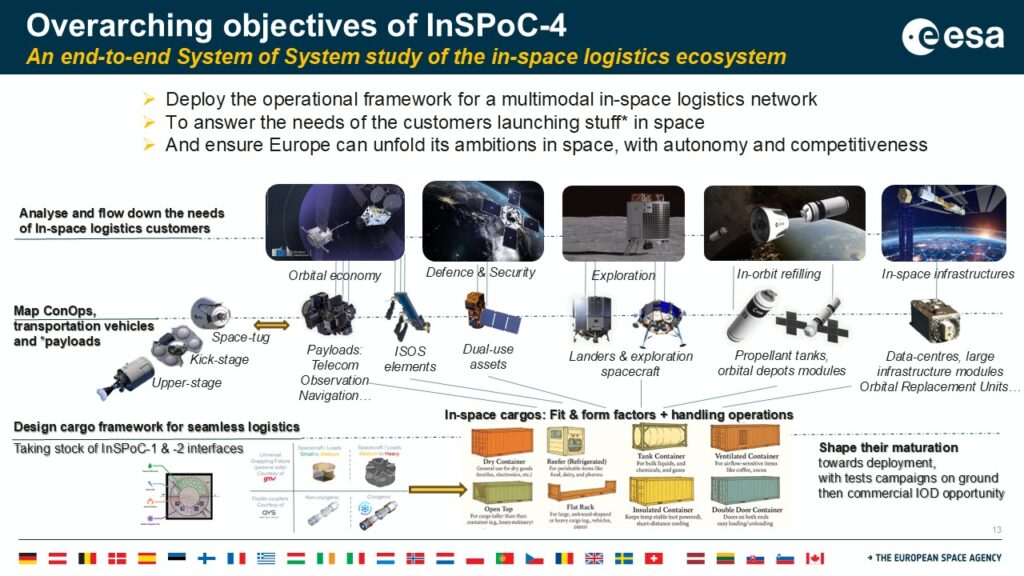
Europe’s in-space logistics infrastructure is taking shape, and the European Space Agency is coordinating with industry to answer critical advanced in-space logistics questions. What matters when designing and transferring in-orbit cargo that works across a multimodal in-space logistics network? How should we design space tugs and depots to ensure their interoperability and compatibility with the widest range of applications?

ESA’s InSPoC-4 initiative is working with European industry to answer these questions – and, eventually, to demonstrate the solutions in orbit. The InSPoC-4 Pitch Day explored these questions with European industry, paving the way for the InSPoC-4 Ideation Phase Invitation to Tender (ITT) that was released in March.

InSPoC-4 brings together the interoperable interfaces developed through InSPoC-1 and -2 – covering rendezvous, docking and refilling – to establish an operational framework for multimodal in-space logistics.

Technologies and requirements

Participants from across the European SpaceTech community met on 5 February 2026 to discuss technology proposals at the InSPoC-4 Pitch Day. Pitch Days are an important element of FLPP, ESA’s programme for future space transportation, and are designed to bring developers, users and customers into the same conversation early in the development process.

At the InSPoC-4 Pitch Day, technology providers and system integrators presented proposals addressing in-space logistics challenges across the four InSPoC-4 domains:

  • Space cargo
  • Cargo transfer
  • In-orbit maintenance
  • Orbital warehouse & parking orbit management

System integrators outlined operational needs and interface constraints they expect future logistics architectures to meet. Technology providers responded with potential solutions.

Following the presentations, participants had the opportunity to express their interest in B2B sessions to discuss potential partnerships and consortia arrangements ahead of the recently published ITT. The ITT is open to all eligible companies in participating Member States, regardless of whether they took part in the Pitch Day.

Hacking the System

As the ITT has already been published, ESA will soon host a “System Hackathon” for the European SpaceTech community and potential customers. Technology providers, system integrators and potential customers will map out use cases and Concept of Operations (ConOps) for in-space logistics. The results of that event will become the blueprint for what the InSPoC-4 companies develop and demonstrate.

As with all FLPP initiatives, InSPoC-4 places early system integrator and customer input at the centre of its approach, rather than adapting solutions to technology developed in isolation. The Hackathon brings users and developers into the same design process early, supporting closer alignment between needs and solutions.

“A key factor in ensuring the effectiveness of the InSPoC-4 Preliminary System Study is to ensure it is  driven by customer needs. The ‘System Hackathon’ we are organising will address this objective by bringing together end users and the in-space logistics industry stakeholders to map and flow-down a set of key use cases – covering commercial, institutional and security needs. These will then drive the analysis to ensure utmost impact for the in-space ecosystem,” said Yann Tincelin, InSPoC Programme Manager and acting Technical Officer for InSPoC-4.

From system studies to in-orbit demonstration

The InSPoC-4 ideation phase studies will begin in summer 2026 and conclude in summer 2027. They will focus on the system perspective of in-space logistics before progressing through preparatory, definition, and implementation phases towards an in-orbit demonstration. This incremental approach supports commercially-relevant development and reduces the time it takes for a minimum viable product (MVP) to reach the market.

System integrators and customers shape requirements throughout the process, helping steer developments towards near-term missions and commercially-relevant services. The ITT is open to all eligible companies in participating Member States. Companies joining InSPoC-4 during the ideation phase contribute to the technical architecture and operational frameworks behind Europe’s future orbital logistics capabilities, including reusable space tugs, orbital propellant depots, and the missions that rely on them.

ARTICLE CATEGORY:

The European Space Agency’s programme for future space transportation, FLPP, brought together 230 onsite participants from 23 European countries in Paris for its Spring Session on 9 March, with more than 250 additional participants following online. The largest gathering in the programme’s history, with interest exceeding available places, the session offered a clear view of a European space transportation community already engineering the capabilities it will depend on in the coming decades. 

Opening the day, STS Senior Advisor Jérôme Breteau noted the trust Member States place in ESA. “Space is now clearly recognised as a strategic domain,” he said. “Programmes like FLPP are essential to transform political ambition into programmes, and programmes into technology.” 

Head of FLPP Pier Domenico Resta reinforced the role of FLPP: “Our role is to implement industry’s many great ideas in the best possible way,” he said, expressing confidence that the programme is on track to deliver these capabilities. 

slide 1
ESA FLPP Team
previous arrowprevious arrow
next arrownext arrow
 
Shadow

Throughout the session, exchanges between industry, ESA and Member State representatives reflected a changing operational context for space transportation. Reusable launch systems, in-orbit mobility and logistics capabilities are increasingly treated as strategic infrastructure, supporting both civil and defence needs. Servicing spacecraft, refuelling assets in orbit and sustaining operations over time are becoming central to Europe’s autonomy and resilience in space. 

FLPP is already operating within this reality, enabling the alignment of technology development with the emerging operational requirements of both institutional and commercial users. 

A widening industrial and institutional circle

Discussions also illustrated how the European SpaceTech community continues to expand. Hungary and Luxembourg, two of the four newest members, presented their national objectives and stakeholders during the event. They join Greece and the United Kingdom as the newest members of the FLPP network, bringing the total to 18 countries participating in the programme

“FLPP has opened the door to exploration and in-space activities beyond traditional satellite communication,” said Bob Lamboray, Senior Manager Lead for Exploration & Space Resources at the Luxembourg Space Agency. He added that the motivation for joining FLPP was to “develop and diversify the national space industry. We believe that commercial utilisation of space transportation technologies is a key element in growing an industry and enabling companies to succeed in the long term.” 

Industry perspectives shared during the defence-focused panel reinforced this. Victoria Carter-Cortez, Business Development Manager at in-orbit servicing company Astroscale, said, “The joint perspective of industry and institutions is essential if we want to move forward. Dual-use technologies bring diversified revenue streams, but they also create opportunities to grow core capabilities.” 

The panel brought together representatives from Member State delegations and industry to discuss the economic and strategic benefits of dual-use technologies. The discussions confirmed the importance of the topic, while work towards aligning priorities across the community continues. 

“Many of the fundamental building blocks are the same regardless of whether applications are civilian or defence-related,” she continued. “What matters is the evolving operational mindset and the continuous dialogue that allows industry to mature technologies to higher readiness levels.” 

Colonel Marcin Mazur, Vice President at POLSA, the Polish Space Agency, stressed that “it’s important to be prepared … the key is to invest in capabilities that could be used for both civilian and defence purposes,” and the usage of those capabilities are decided by the end user. 

Technologies advancing through industrial delivery

Project presentations across the programme demonstrated how FLPP is translating into technological progress. Updates shared throughout the day showed development work advancing across propulsion systems, composite structures, avionics, autonomous operations and in-orbit logistics technologies. 

Several companies described how concepts initially proposed through open calls are progressing with ESA’s support, highlighting how the FLPP team supported them in overcoming technical setbacks and refining designs, which has been integral to moving from promising prototypes towards validated commercially-attractive hardware and system demonstrationsThe technologies supported by FLPP are now winning commercial contracts beyond Europe: at the event, Spanish company Arkadia Space announced a recent contract in the United States alongside existing European ones. 

The session also recognised eight projects through the FIRST! Sustainability Awards, highlighting technologies contributing to more environmentally responsible space transportation and reflecting the increasing integration of sustainability into industrial development. 

FIRST! Sustainability Award: tecnalia
previous arrowprevious arrow
next arrownext arrow
 
Shadow

In-space capabilities

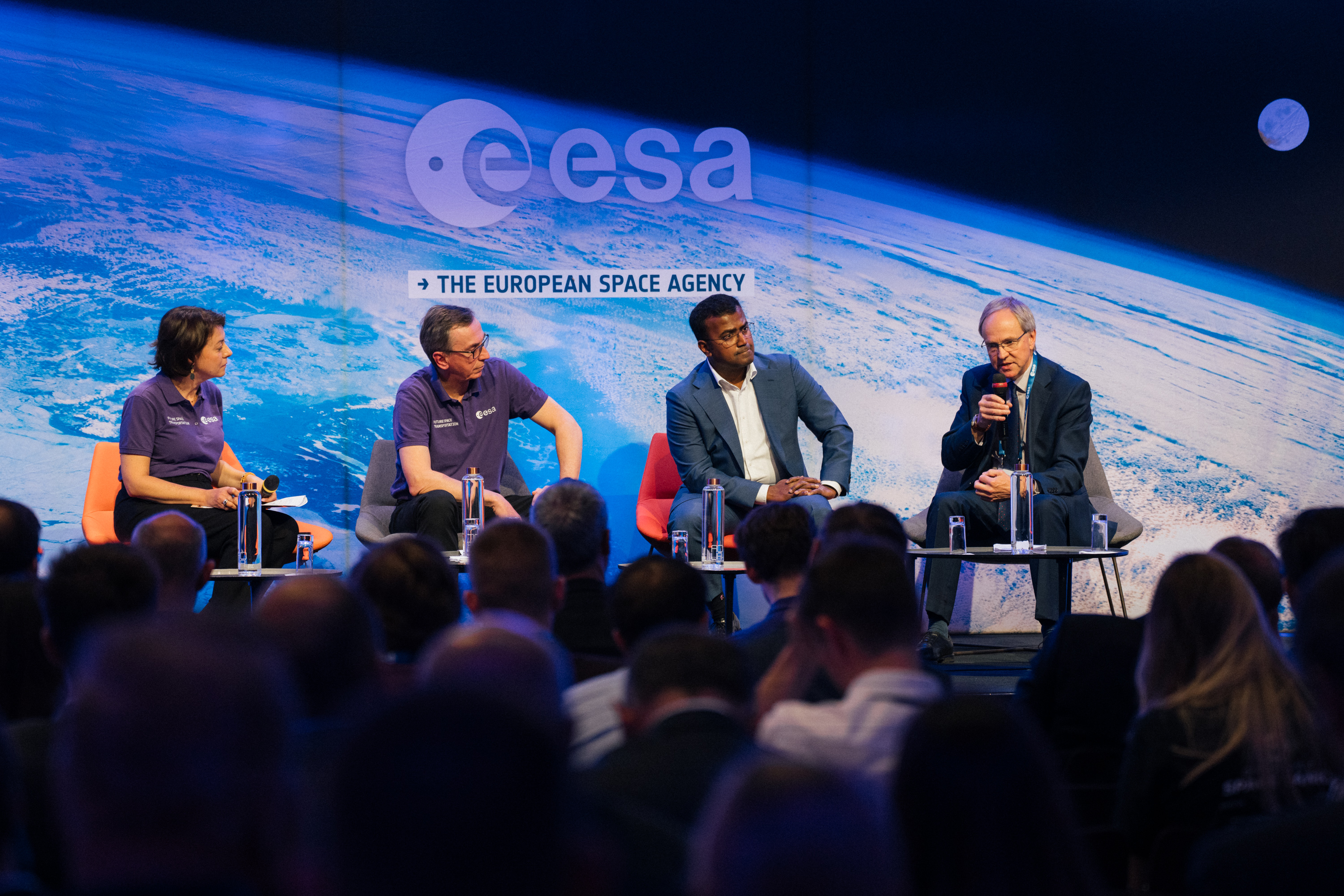
The expansion into in-orbit transportation and logistics capabilities featured prominently throughout the event, including a dedicated panel on coordination between ESA and the European Commission on in-space servicing, assembly and manufacturing (ISAM) and the EU’s ISOS initiative. 

Tiago Soares, Head of ESA’s Clean Space and Circular Economy Office and Chair of the Agency’s ISAM working group, described the scale and opportunities in ISAM. “ISAM is truly transformational,” he said. “It is multi-actor, multi-purpose and multi-element. We are working together to define a European vision that will change how we think about sustainability in space, how value chains evolve and how assets already in orbit can be used in new ways.” 

Panel discussions showed how launch capabilities are now complemented by sustained in-orbit mobility and servicing architectures. Dual-use considerations and ISAM development pathways are key to supporting technology priorities and industrial participation.  

Technologies under development through FLPP’s In-Space Proof-of-Concept (InSPoC) activities – including rendezvous and docking systems, cryogenic refilling solutions, autonomous operations and containerised cargo concepts – form part of this emerging area. 

A programme in motion across Europe 

By the close of the session, the scale of FLPP activity across Europe’s SpaceTech community was unmistakable. Participation continues to grow, technologies are advancing across multiple domains, and industrial collaboration is increasingly focused on autonomy, resilience, and sustained activity in orbit. 

Described by Kate Underhill, THRUST! Project Manager, as “the place to be for future space transportation in Europe”, the FLPP community will next gather in Paris on 14 October. 

PIAP Space
Project: RAVEN
PlayPause
previous arrow
next arrow
PIAP Space
Pangea Propulsion
PERMATHRUST
Lios
EcoDeltaV
Qascom
GKN Aerospace Sweden AB
The Exploration Company
Sener
ArianeGroup
GMV
ArianeGroup
previous arrow
next arrow

Click the images to view project portfolios. See more project portfolios here.

ARTICLE CATEGORY:

“We are enabling the in-space logistics infrastructure for the orbital economy and keeping Europe in the driving seat” said Yann Tincelin, Programme Manager for InSPoC (In-Space Proof of Concepts) as he opened the recent ‘InSPoC Cross-Cutting Convergence Workshop’ in Paris. His words capture the driving force behind the European Space Agency’s approach to shaping Europe’s in-space transportation ecosystem: sustained coordination across SpaceTech stakeholders.

Since the launch of the Preparation Phase for InSPoC-1 (enabling in-orbit rendezvous, docking and non-cryogenic refilling) in 2022, multiple projects have been signed and completed across various elements and phases, including the InSPoC-1 Preparation and Definition phases, InSPoC-2 (in-orbit cryogenic propellant storage and refilling) Preparation phases and InSPoC-3 (on-board and shared intelligence) Ideation phases. Building on these successes, the first OSIP Call for Ideas for InSPoC-4 (space cargo and advanced in-space logistics) is now open. 

These building blocks will first be integrated into Orbital Transfer Vehicles (OTVs) to extend their in-space capabilities and, in the future, into Odyssey, ESA’s flagship programme for in-orbit refilling. Rapidly shifting geopolitics and global competition are increasing the urgency for Europe to develop such capabilities and to develop them fast, something reflected in the collaboration beyond ESA as the Agency aligns with the European Commission around mission commonalities and complementarity. 

InSPoC Workshop title card
previous arrow
next arrow

In late October 2025, the InSPoC Cross-Cutting Convergence Workshop brought around 30 key companies to Paris for tow days of intensive work on consolidating InSPoC enabling interfaces for in-space logistics and Odyssey’s commercial foundation. Sixe weeks later, the In-Space Transportation Club convened its fourth session online, with European SpaceTech stakeholders aligning on key capabilities and interoperability approaches to interact and act in safe within a coordinated ecosystem. Both packed events reflect growing industry commitment to Europe’s in-space ambitions.

Interoperability was central to both events. The In-Space Transportation Club exists specifically to gather European SpaceTech stakeholders – in-space logistics integrators & operators, enabling technology providers, customers, investors, Member States, and national space agencies – to coordinate on the shared infrastructure while competing on the services built atop it.

Strategically for Europe, there is no ‘winner takes all’ philosophy for the ISAM (In-Space Servicing, Assembly, and Manufacturing) ecosystem; rather, it is a collaboration providing interoperable unbundled services on an open market, offering dual-use civil and defence capabilities. Ensuring that docking, refilling, intelligence and logistics capabilities use open standard, non-proprietary interfaces allows multiple European players to access the market rather than creating fragmentation. InSPoC focuses on the ground derisking and demonstrating in-orbit the enabling interfaces for an in-space logistics ecosystem. These interoperable interfaces will allow to spacecraft from different manufacturers to interact together, allowing servicers to dock, refill, and transport their targets in space.

The October workshop placed equal emphasis on commercial and technological development. Companies delivered elevator pitches across InSPoC-1, -2 and -3, alongside industry working on complementary FLPP maturation projects.

These ranged from maturation of in-space cryogenic engines to in-space transportation vehicles, further enriching the dialogue and reinforcing the coherence across parallel developments. The opportunity to share successes demonstrated how cross-nation collaboration and consortia were working together with a common goal: to develop the building blocks and enabling interfaces for enabling the capabilities to act in space, with rendezvous, docking, refilling, transportation and intelligence in space.

A group of ESA cross-directorate experts took the InSPoC and Odyssey participants through a series of exercises, encouraging collaboration in order to shape four value propositions for the in-orbit refilling services proposed by Odyssey, namely:

  • Distributed in-orbit refilling for dual-use applications in Earth vicinity 
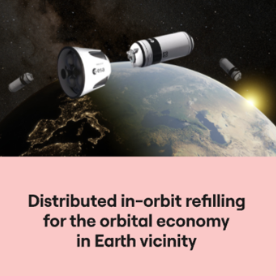
  • Distributed in-orbit refilling for the orbital economy in Earth vicinity 
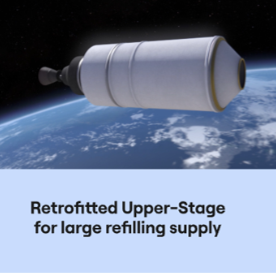
  • Retrofitted upper-stage for large refilling supply 
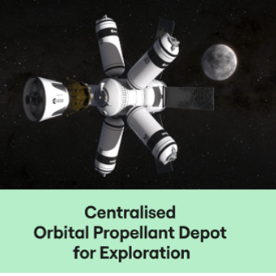
  • Centralised orbital propellant depot for exploration 

Philip Thomas, Head of ESA’s ScaleUp Division, underlined what’s at stake: “We are entering a new space paradigm which will open up the in-orbit market. Odyssey is critical to secure the future of European space competitiveness.”

The December Club session maintained this commercial focus, bringing potential Primes and Tier-1 suppliers together to pitch for Odyssey’s Call for Ideas and in preparation of the upcoming Odyssey Invitation to Tender. The session addressed the practical requirements: rendezvous and GNC interfaces, docking and refilling interfaces, cryogenic propellant management, on-board and shared intelligence, and advanced in-space logistics. Companies are now delivering these once-theoretical capabilities.

ESA provides a unique framework for this progress, helping industry mitigate risk and move forward quickly as other nations and commercial players are moving fast to establish standards and capture market share in the emerging orbital economy. Europe’s approach – building interoperable, open-standard capabilities that enable multiple players rather than creating proprietary systems – offers a strategic alternative, but only if executed with speed.

“We need to be creating and shaping this market,” continued Philip Thomas, “the window of opportunity is small and requires Europe to act at pace with sufficient scale. Defining and targeting future market opportunities shaped by InSPoC has a vital role to play in this.”

The workshop and the Club demonstrate ESA’s role in Europe’s space transportation ecosystem, providing the framework for technology sharing and industry alignment. As InSPoC continues to move forward, this coordination demonstrates that Europe is meeting the future today.

ARTICLE CATEGORY:

InSPoC-4 focuses on advanced in-space logistics, paving the way for scalable and sustainable future applications from Earth’s multimodal logistics ecosystems.

 ESA’s programme for future space transportation, FLPP, is hosting a virtual Pitch Day to hear from technology providers and space transportation system integrators who submitted ideas on topics including space cargo unitisation, cargo transfer, in-orbit maintenance, and parking orbit management. 

Register now

What to expect

During the event, you will:

  • Hear pitches from technology providers and space transportation system integrators 
  • Explore how the proposals connect across in-space transportation value chains, revealing complementary capabilities and potential consortia 
  • Understand the scope and focus areas ahead of the InSPoC-4 ITT, which will launch shortly after the Pitch Day 
  • Express your interest in connecting with other partners in the European SpaceTech community in focused B2B sessions to be held following the event 

This is a chance to shape the systems and technologies that will enable efficient cargo transport in orbit and support Europe’s space logistics market. 

About

In-Space Proof-of-Concepts, or InSPoC, is an initiative within ESA’s future space transportation ecosystem programme (FLPP). Through a series of open competitions, InSPoC is de-risking space transportation capabilities and foster interoperable interfaces with incremental in-orbit demonstrations.

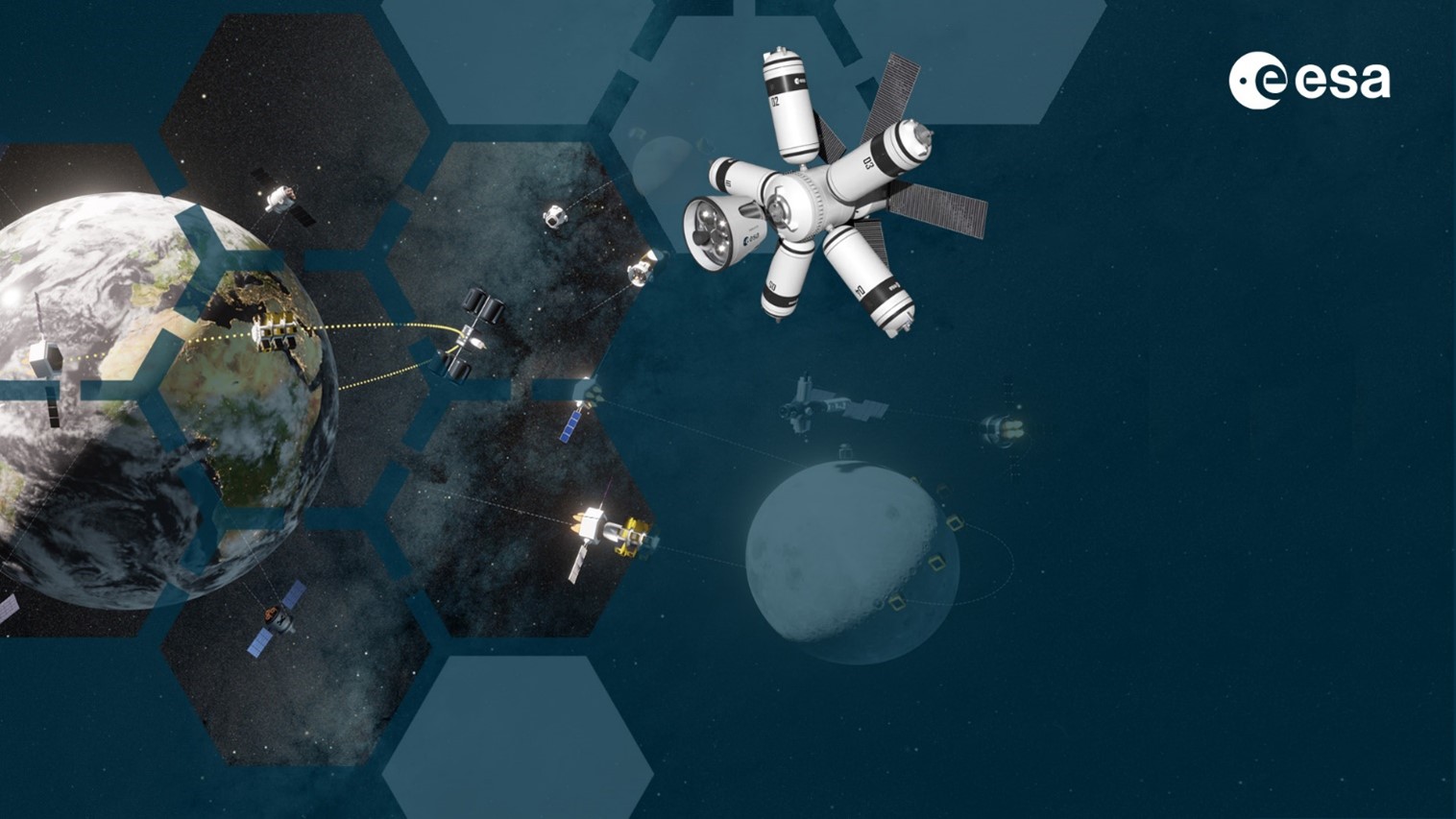
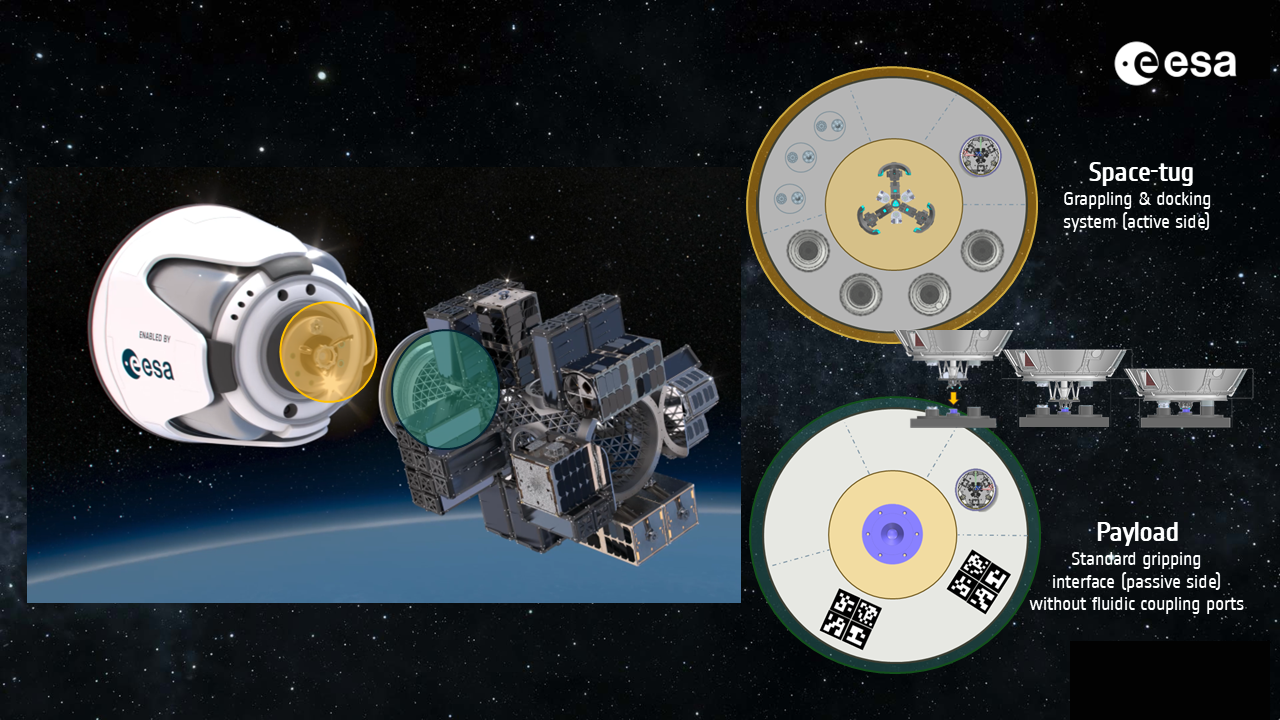
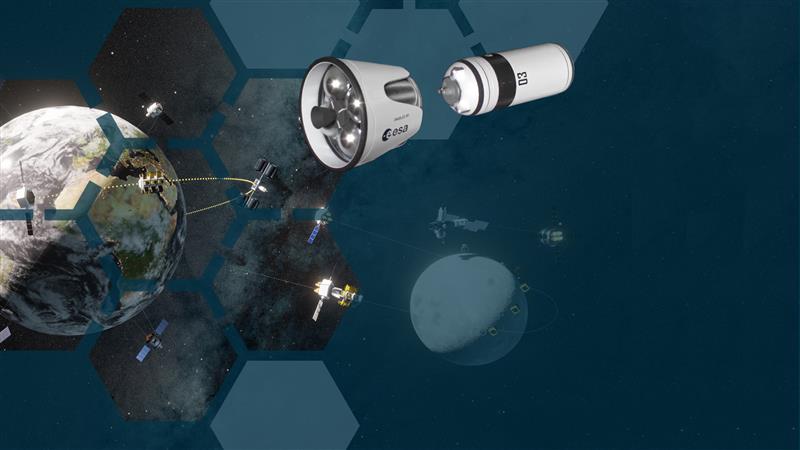
ESA is enabling the future: an ecosystem with a scalable, modular in-space transportation fleet based on optimised reusable launchers. In such an ecosystem, reusable space-tugs will dock to their payloads in parking orbits, deliver them to their orbital destination, and refill with orbital propellant depots, allowing them to pursue their missions and/or providing transportation support for in-orbit servicing.

Register now

ARTICLE CATEGORY:
ON THIS PAGE
InSPoC-2InSPoC-3

The European Space Agency’s in-space transportation activities continue to progress with FLPP, ESA’s programme for future space transportation. In-Space Proof-of-Concepts (InSPoC) 2 and 3 have now completed their current phases, delivering results that advance Europe’s capabilities in cryogenic refilling and intelligent operations.  

Preparation Phase 

InSPoC-2 has now completed its Preparation Phase for in-orbit cryogenic propellant storage and refilling. Over the past ten months, five industrial consortia led by ArianeGroup GmbH, S.A.B. Aerospace S.R.O, The Exploration Company, GMV Aerospace and Defence, and MT Aerospace AG: 

  • analysed the in-space refilling ecosystem and use cases for cryogenic propellant storage and refilling,  
  • performed trade-off analyses,
  • began collaborative designs of cryogenic coupling ports for in-orbit refilling,  
  • developed conceptual designs of the functional chains and interfaces needed to store and transfer propellant in orbit,
  • synthesised the conceptual design for a demonstrator,
  • prepared the project’s roadmap up to the in-orbit demonstration.

Click to view executive summaries from the projects

The Exploration Company
previous arrow
next arrow
The Exploration Company
SAB
MT Aerospace
GMV
ArianeGroup
previous arrow
next arrow


The work includes concepts for interoperable refilling interfaces and cryogenic coupling ports, as well as an initial conceptual design for an in-orbit demonstrator and plans for commercial maturation of in-orbit refilling. This phase forms a key step on the roadmap towards a cryogenic in-orbit demonstration around 2030. 

Following the Preparation Phase, the InSPoC-2 Definition Phase will open for parallel contracts in 2026. The Invitation to Tender will be issued in restricted competition for prime contractors; new subcontractors are welcome to join the consortia.  

Ideation Phase 

InSPoC-3 has completed its nine-month ideation and preliminary system study on on-board and shared intelligence. Seven parallel consortia worked on the ideation phase – OHB Digital Connect GmbH, GMV Aerospace and Defence S.A.U., Zaitro s.r.o., Huld s.r.o., Orbital Paradigm SL, Blackswan Space, and Space ScAvengers. The consortia examined four main problem domains:  

  • on-board autonomy and reconfigurability, 
  • on-board safety and longevity, 
  • shared intelligence for advanced cooperation,  
  • spacecraft fleet management.  

Activities covered modular, software-defined architectures, over-the-air updates, AI-enabled autonomy, digital twins, intelligent networking and concepts for a future space logistics operating system.  

Click to view executive summaries from the projects

GMV
previous arrow
next arrow
GMV
Space scAvengers
Blackswan
Zaitra
OHB
Orbital Paradigm
Huld thumbnail
previous arrow
next arrow


The consortia identified how some of the latest software, data science and artificial intelligence techniques can be used to build new technologies that could address these upcoming space-tug needs. The study culminated in designing an in-orbit demonstration that could be performed to de-risk these on-board and shared intelligence technologies. 

The InSPoC-3 Preparation Phase will begin in 2026, open to parallel contracts in open competition. It will refine conceptual designs of key building blocks and the InSPoC-3 in-orbit demonstration.  

A joint workshop in April 2025 brought the InSPoC-2 and InSPoC-3 teams together first within their respective projects, and then in a combined session focused on shared challenges and interface alignment. InSPoC-2 and -3 met together again in October, this time with InSPoC-1, to consolidate the outcomes of the projects and integrate docking, refilling, cryogenics and intelligence altogether. 

InSPoC Workshop title card
previous arrow
next arrow


The InSPoC-2 consortia compared their design approaches and worked to align cryogenic use cases, requirements and terminology. They also began sharing early interface needs for refilling operations and identified the critical building blocks and subsystems that must be matured to support interoperable designs. 

The InSPoC-3 consortia met with space tug system builders to define which technologies should be prioritised for a future in-orbit demonstration. The consortia also defined a first classification of autonomy levels for space logistics.  

This collaborative format supports European coordination on topics such as cryogenic coupler requirements, intelligent networking, and user needs for future space-tug builders, and establishes the foundations of a common in-space logistics architecture.  

Insights from the InSPoC-2 Preparation Phase and InSPoC-3 Ideation Phase were shared with the European SpaceTech community at the fourth session of the In-Space Transportation Club on 9 December 2025.  

ARTICLE CATEGORY:

The Exploration Company moves ahead with Europe’s first in-orbit docking & refilling demonstration for space transportation

Europe is shaping its capabilities to act in space.  

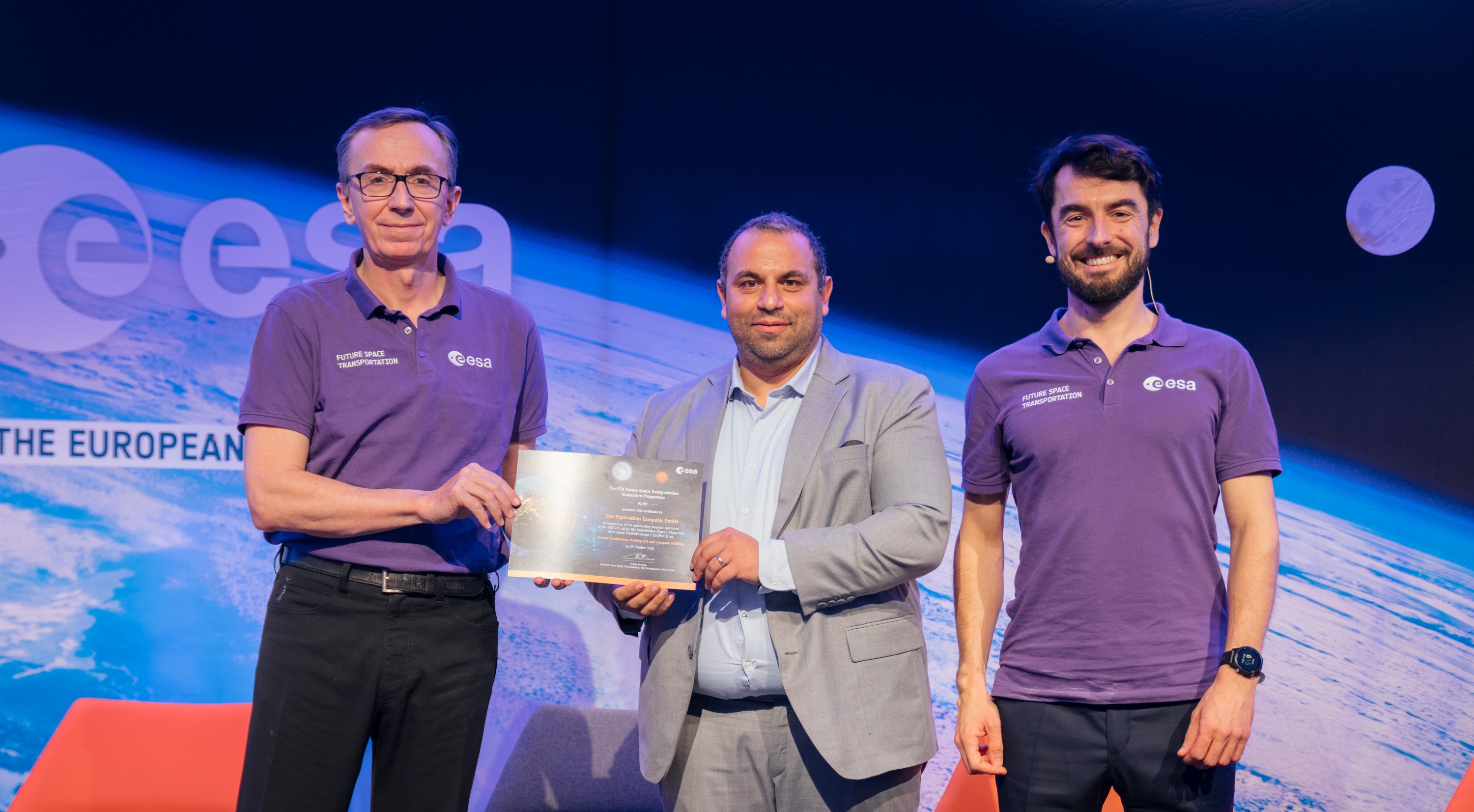
Within ESA’s programme for future space transportation, FLPP, In-Space Proof-of-Concepts (InSPoC) is now entering its consolidation toward final implementation and in-orbit demonstration. The Exploration Company has been awarded the contract for the Consolidation Phase (~Phase B2) of InSPoC-1, marking the next step toward demonstrating Europe’s capability for orbital rendezvous, docking, and non-cryogenic refilling. 

The InSPoC venture is aimed at providing Europe with key capabilities to act in space, working toward enabling an in-space logistics ecosystem. InSPoC-1 focuses on the capabilities that make in-space logistics possible – in-orbit rendezvous, docking, and propellant transfer between spacecraft.

These capabilities are essential to Odyssey, ESA’s future flagship programme deploying in-orbit refilling services, which will enable a wide range of applications, from distributed in-orbit refilling in the vicinity of Earth, which serve dual-use applications, to centralised orbital propellant depots, which support exploration missions. 

“Europe has a timely window of opportunity to secure a leading role in the orbital economy and to ensure the resilience of its space infrastructure. The InSPoC-1 project is a foundational step in this direction,” said Yann Tincelin, InSPoC Manager. “InSPoC-1 is spearheading a coordinated approach in Europe to ensure that future spacecraft can operate together through shared, interoperable interfaces.” 

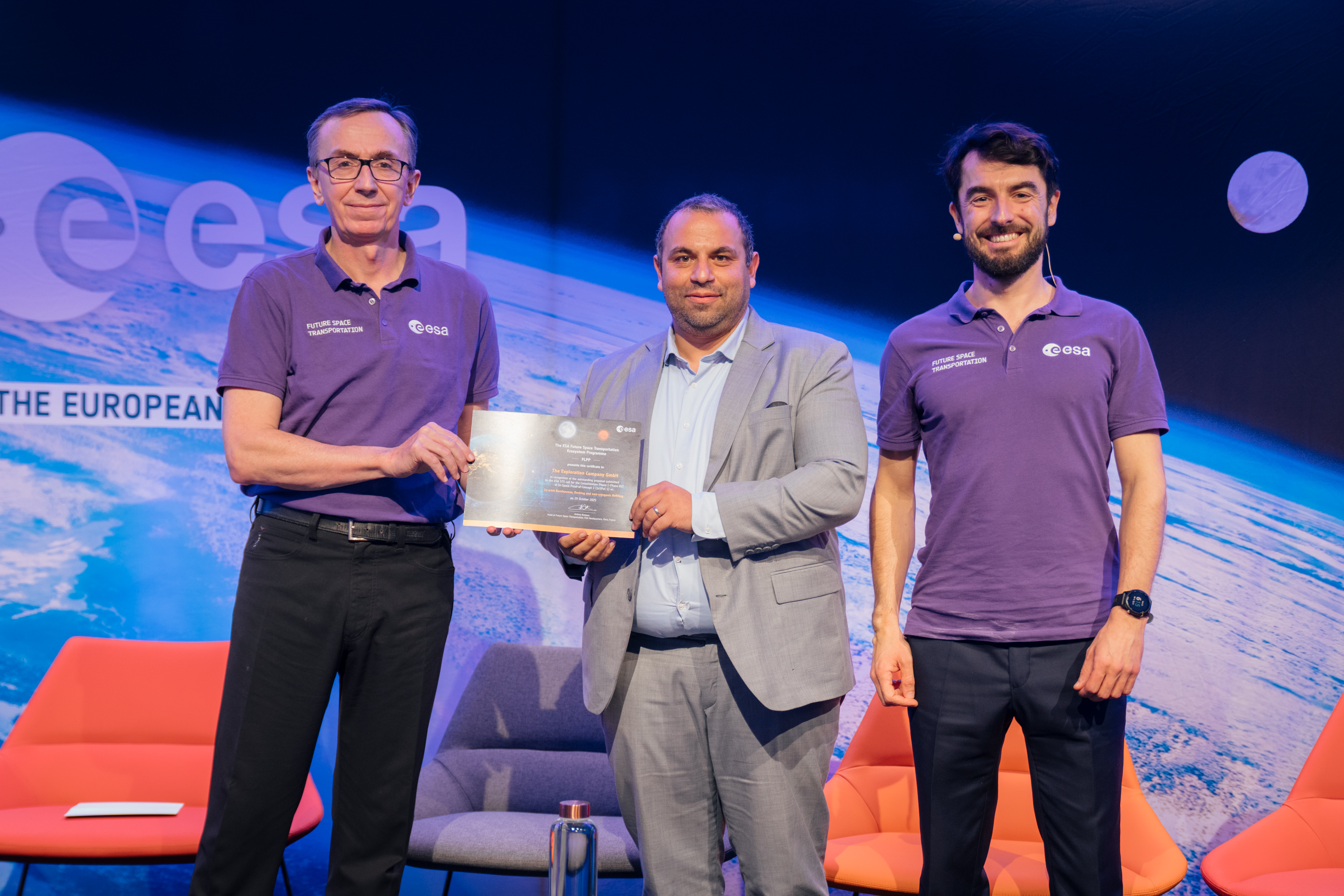
Jérôme Breteau, Head of Future Space Transportation at ESA; Benjamin Kawak, The Exploration Company; and Yann Tincelin, InSPoC Manager

InSPoC-1 will derisk, demonstrate and share with the SpaceTech ecosystem two key interfaces referred to as Minimum Viable Products (MVPs)

  • MVP-1 pertains to rendezvous guidelines & GNC-related interfaces, that will be released to ensure different spacecraft can perform safe collaborative rendezvous together, with shared visual markers and high-level rendezvous protocols, 
  • MVP-2 is related to the Docking and Refilling interface, promoting modularity and interoperability, with a release of the agreed technical interface specifications (known as the Interface Control Document, ICD), fostering a wide adoption of its passive side, and leaving most of the active side open for innovation.  

Following a competitive procurement process under FLPP, the Consolidation Phase contract for InSPoC-1 has been awarded to a European consortium led by The Exploration Company from Germany.  

The Exploration Company’s award was announced at the FLPP Autumn Session in Paris, where ESA presented recent milestones across Europe’s in-space transportation efforts.  

“InSPoC-1 is about execution and adoption. In Phase B2 we take docking, refilling, and power-data transfer to a prototype proven in a relevant environment. We will channel results through the Users’ Club and the Standardisation Committee so primes and SMEs can align on practical interfaces. That is how Europe scales safe in-orbit services,” said Hélène Huby, CEO of The Exploration Company. 

InSPoC-1 Project Flyer
The Exploration Company

The InSPoC-1 Consolidation Phase will refine system designs, integrate industrial inputs and prepare for the flight demonstration to follow. The final stages, including the in-orbit demonstration, are part of the FLPP proposal for CM25. The enabling interfaces (MVPs) will be consolidated during the ongoing Phase B2 with industry partners and released with open interface architectures, free of export-control, to allow a wide adoption and seamless integration of these interfaces and capabilities.

These are pre-requisites to ensure European stakeholders operate, interact and provide services within the upcoming orbital market.  The aim is to strengthen technical harmonisation and promote interoperability across Europe’s in-space logistics capabilities, and to allow European actors to deploy new services in the orbital economy. 

The in-orbit demonstration is planned for 2028, when two spacecraft, Oura, developed by The Exploration Company, and EROSS, from Thales Alenia Space France, will perform a full sequence of rendezvous, docking, and refilling in orbit.  

Session 4: 9 December, 9:30-12:30 CET
In-Space Transportation Club

By demonstrating technologies incrementally, FLPP brings key components of the future space transportation ecosystem to market faster. This stepwise approach accelerates progress while reducing cost and risk for European companies. 

The current design status, shared reference architecture and next steps for the MVPs will be presented to the European SpaceTech community at the In-Space Transportation Club Session #4 on 9 December 2025.

Each milestone in the InSPoC roadmap moves Europe closer to operational in-space transportation: connecting industrial capability, shared interfaces and sustainable orbital infrastructure. 

ARTICLE CATEGORY:

Future Space Transportation Spring Session draws record attendance - read more

The ESA Future Space Transportation Spring Session brings together ESA, industry, investors and Member State delegates to review progress across Europe’s space transportation activities. Now in its fourth edition, the Session has become a fixed point in the European space transportation calendar.

Agenda

14:00 CM25 key outcomes and next steps
14:15 New perspectives from FLPP Member States: integration into the ecosystem
14:45 Dual-use advancement in in-space transportation
15:30 Break
16:00 FLPP at a glance: programmes and progress
16:20 Technology in practice: turning concept into capability
17:00 FIRST! Sustainability awards
17:35 Break
18:00 From contract to impact: industry success stories
18:45 ESA-EU ISAM/ISOS coordination: programmes, roles and alignment
19:15 FLPP process and open calls
19:30 Closing remarks and networking cocktail event
23:00 End of event

Accommodation & Transportation


ARTICLE CATEGORY:

Last week in Paris at Salon de l’Aveyron, the European Space Agency’s programme for future space transportation, FLPP, united the European space industry once again with its Autumn Session, reflecting a programme that is a key strategic enabler of space transportation technology development. The space transportation community spoke with clarity and conviction – FLPP is where the future of European space capabilities is being built today.  

With more than 220 participants on site and many more following online, the pride and confidence in the programme’s progress were unmistakable. Returning players greeted each other enthusiastically and newcomers were welcomed with open arms. Each iteration of the twice-yearly session grows in size and scope, reflecting how firmly FLPP has become established as a strategic enabler of Europe’s space transportation capabilities. 

slide 1
ESA FLPP Team
ESA FLPP Team
previous arrowprevious arrow
next arrownext arrow
Shadow

Conversations about engines, demonstrators, and in-space operations reflected the growing maturity of the approach: technically disciplined, commercially motivated, and coordinated across borders and sectors. Panellists from start-ups, large system integrators, national and European agencies, and Member State delegations described how ESA provides the structure that makes such collaboration possible -through demonstrators, minimum viable products (MVPs), and a rapid development model that manages risk while maintaining progress.  

ESA’s Director of Space Transportation, Toni Tolker-Nielsen, and Jérôme Breteau, Head of Future Space Transportation, opened the event by reinforcing FLPP’s strength in connecting Europe’s industrial capability, national ambitions, and ESA’s long-term strategy. FLPP ensures new technologies mature in step with market needs and future missions.

“We are putting Europe in the driving seat,” Breteau said, setting the tone for a day shaped by confidence in Europe’s collective direction. 

For industry, this has created space to think bigger. “ESA gave us the freedom to explore, innovate, and contribute our own ideas,” said one participant. Christian Bauer of DeltaOrbit added that FLPP “gave the team confidence that we can do this – and that we’re on the right track.”

That sense of confidence in ESA’s direction rang through the day. As a strategic enabling programme, it has become a mirror in which European companies see themselves reflected in the future they are helping to build. 

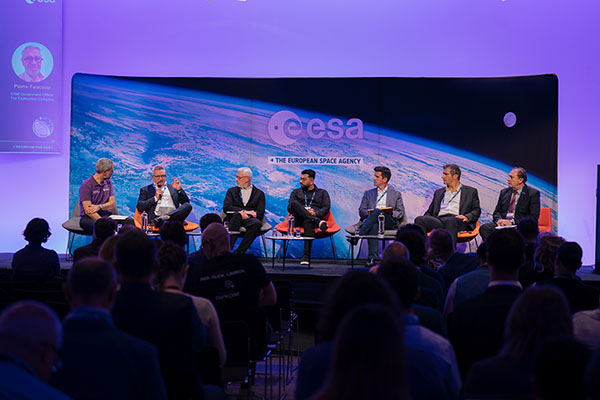
For the first time in these sessions, a panel focused on dual-use and defence applications of space technology, and how the technologies developed under the programme will be crucial to safeguarding Europe’s future. Industry speakers and a representative from the Polish Space Agency reinforced how autonomy, mobility, and resilience are essential for both civil and defence applications, and that collaboration through ESA helps Europe prepare for both. 

That future was visible in the results. Two new projects in in-space transportation were recognised for their achievements. The Exploration Company signed a contract to advance InSPoC-1 into its consolidation phase for in-space docking technologies. PIAP Space signed a contract for the first demonstration mission under the RAVEN programme, which will test in-orbit transfer, approach, and controlled de-orbit manoeuvres.

slide 1
PIAP Space
PIAP Space receives an award at the FLPP Autumn Session.
PIAP Space has signed a contract for the first demonstration mission under the RAVEN programme, which will test in-orbit transfer, approach, and controlled de-orbit manoeuvres.
previous arrowprevious arrow
next arrownext arrow
Shadow

These advancements highlight how FLPP continues to strengthen Europe’s capabilities across every phase of the journey – from access to orbit to in-space logistics and return. Each milestone is part of a broader design: an interconnected ecosystem of technologies and actors ready for operational use. 

That future is also not far off – FLPP’s model of incrementally demonstrating Minimum Viable Products, or MVPs, ensures marketable products quickly. Instead of spending years developing an expensive spacecraft, this incremental approach is key to ensuring marketable outcomes while advancing Europe’s overall capabilities in space technology.  

Member State representatives echoed that trust. Delegates described FLPP as reliable, responsive, and closely aligned with their priorities. One noted how “whenever we had problems, it was easy to solve and overcome them,” while another said the programme “helped us gain time” and opened opportunities for national industry, including in defence markets. Their remarks reflected a shared view: ESA delivers because it works collaboratively, supports national industries, and keeps Europe moving as one. 

Throughout the day, cooperation remained the steady theme – across borders, systems, and disciplines. Breteau reminded participants that “it’s important that the this endeavour goes on,” in a call for continuity. The community now gathered sees itself as part of a longer arc, where Europe’s capabilities are not only advancing but converging. 

As the Ministerial Council approaches, the message is unmistakable. FLPP is not a programme on the rise; it is the foundation of Europe’s future in space transportation – a place where technical achievement, commercial logic, and strategic coordination already meet. The future is being built here, and it is already taking shape. 

ARTICLE CATEGORY:

Steer the future of in-space logistics 

Join ESA’s In-Space Transportation Club for Session #4 on 9 December 2025, 9:30-13:00 CET. This virtual session will provide updates on CM25 decisions and the full-swing implementation of InSPoC and Odyssey, focusing on two pillars for Europe’s in-space logistics ecosystem: shared interoperable interfaces for acting in space and deploying in-orbit refilling capabilities for Europe.

Interoperability for in-space logistics 

The session will present the latest outcomes from the In-Space Proof-of-Concepts on rendezvous, docking and refilling, including:

  • InSPoC-1: Status and next steps for releasing MVPs on rendezvous and GNC, and on docking and refilling interfaces.
  • InSPoC-2: Progress on cryogenic refilling, including work toward standardising cryogenic couplers
  • Consolidation: Integration of interoperable interfaces through upcoming workshops and transverse working groups. Open interface control documents (ICDs), free of export-control, will support broad adoption across Europe.

Odyssey, Europe’s in-orbit refilling service 

The second part of the session will introduce Odyssey and launch the Odyssey procurement. Topics include the approach to distributed and centralised orbital propellant depots, industry pitches from Primes and Tier-1 suppliers contributing to the Preparation Phase, and the role of Odyssey in enabling a scalable logistics system for Europe across dual-use and exploration missions.

Upcoming opportunities

Participants will receive an overview of next steps across the InSPoC and Odyssey portfolio, including:

  • Forthcoming procurements to advance cryogenic capabilities (InSPoC-2).
  • Work on on-board and shared intelligence (InSPoC-3), supporting the next phase of fleet-level autonomy.
  • Development of containerised and scalable logistics (InSPoC-4), supporting the growth of Europe’s in-space logistics capabilities.
  • The open OSIP Call for Ideas for InSPoC-4, inviting contributions from organisations in participating Member States.

Register now

The In-Space Transportation Club: A SpaceTech Community

The In-Space Transportation Club, initiated in the frame of ESA’s In-Space Transportation Proof-of-Concepts (InSPoC) initiative, serves as dynamic professional network in the European SpaceTech community to discuss and develop innovative space transportation technologies.

The Club empowers the European SpaceTech community to shape the future of European space transportation by connecting stakeholders and supporting the development of essential in-orbit systems.

About

In-Space Proof-of-Concepts, or InSPoC, is an initiative within ESA’s future space transportation ecosystem programme (FLPP). Through a series of open competitions, InSPoC is de-risking space transportation capabilities and foster interoperable interfaces with incremental in-orbit demonstrations.

ESA is enabling the future: an ecosystem with a scalable, modular in-space transportation fleet based on optimised reusable launchers. In such an ecosystem, reusable space-tugs will dock to their payloads in parking orbits, deliver them to their orbital destination, and refill with orbital propellant depots, allowing them to pursue their missions and/or providing transportation support for in-orbit servicing.


Discover more about InSPoC and Odyssey

ARTICLE CATEGORY:

On 28 October, the day before ESA’s Future Space Transportation Autumn Session, teams from InSPoC-1, InSPoC-2 and InSPoC-3 will gather in Paris for a dedicated workshop.

The invite-only event will bring together project participants and ESA for a full day of shaping Europe’s in-space transportation ecosystem.

Programme

The workshop includes:

  • Cross-project workshops
  • Matchmaking opportunities
  • Informal networking among InSPoC-1, -2 and -3 teams

These activities support InSPoC’s goal of developing technologies for in-space refilling, cryogenic storage, and on-board intelligence – essential steps towards Odyssey, ESA’s future orbital propellant depot.

Restaurants, transportation and accommodation near the venue

Agenda Day 1

12:30 Welcome coffee & distribution
13:00 Introduction & workshop overview
ESA
13:30 InSPoC-1 Overview
Spacecraft & ConOps – The Exploration Company
13:40 InSPoC-2 & -3 – Applications Elevator Pitches
14:40 Coffee break
15:00 InSPoC-1 Baseline for Crosscutting Consolidation

  • Rendezvous & GNC baseline
  • Docking & refilling interface architecture – modularity, interoperability and way forward
  • SpaceUSB System Interconnect – Thales Alenia Space 
15:45 Breakout Session #1

  • InSPoC-1 x InSPoC-2 x Applications: Docking & Refilling Crosscutting consolidation
  • Steer the future of InSPoC-3: Group work on most promising intelligence interfaces
16:30 Coffee break
16:50 Breakout Session #2

  • InSPoC-1 & InSPoC-3: Onboard & shared intelligence crosscutting consolidation
  • InSPoC-2 & Applications
18:20 Wrap up and evening networking get-together

Agenda Day 2


9:00 Workshop introduction and presentation of enabling building blocks and interfaces by InSPoC for Odyssey
ESA
9:30 Odyssey Value Proposition
10:00 Odyssey Product
11:00 Odyssey Business
12:00 Wrap up and transition to Autumn Session
ARTICLE CATEGORY:

Details of the event date will be announced soon. 

The Odyssey Pitch Day will virtually bring together Europe’s SpaceTech community to shape the future of in-space transportation and in-orbit refilling infrastructure. Held under FLPP’s InSPoC programme, the event builds on the recent Odyssey Call for Ideas and will gather the community to matchmake primes, technology providers, and potential partners as they prepare for the launch of the Odyssey Preparation Phase Invitation to Tender (ITT).

What to expect

Join a dynamic virtual gathering of Europe’s space transportation ecosystem, where key players, including primes, technology providers, and potential partners, will connect and collaborate ahead of the Odyssey Preparation Phase ITT.

During the event, you’ll:

  • discover the overarching goals of the Odyssey initiative and its demonstration objectives, which integrates insights from the Call for Ideas.
  • hear 5-minute pitches from organisations that responded to the OSIP call – such as primes, subcontractors, and stakeholders
  • explore how the pitches align with different parts of the Odyssey value chains, helping participants identify complementary roles and potential collaborators for the upcoming ITT
  • learn more about the upcoming Odyssey Preparation Phase ITT

The Odyssey Pitch Day offers a unique chance to:

  • take part in defining Europe’s future in-space transportation infrastructure
  • connect with potential partners across the SpaceTech industry

Who can join

The event welcomes professionals from companies across ESA Member States. Registrations will be reviewed to confirm participation.

ARTICLE CATEGORY:

“The dawn of a new era for space transportation” is how Yann Tincelin, Project Manager for future space transportation preparation at the European Space Agency introduced the In-Space Proof of Concepts (InSPoC) programme at a recent conference, outlining the significance of autonomous sovereign capabilities in space for Europe in a rapidly-changing world. But why is the development of a European space transportation ecosystem so important? 

The purpose of InSPoC is to facilitate and enable a dedicated ecosystem of in-space transportation for Europe, which will enable complex missions, establish a sustainable orbital economy and, crucially, keep European industry at the forefront of technological advancements in this field. InSPoC, part of ESA’s future space transportation programme FLPP, is rapidly building a network of European industrial partners, de-risking innovation and facilitating rapid technological advances through collaboration, financial and technical support. 

Europe is already at the forefront of the development of Orbital Transfer Vehicle (OTV) technology, often termed ‘space tugs’, which are vital for moving payloads between different orbits and form the backbone of the vision for a reusable and interoperable in-space transportation system. The aim is to develop the interfaces required to move to the next level, creating an intermodal transport system in space with docking and refilling capabilities, shared intelligence systems and advanced logistics configurations.

No longer restricted to single mission journeys, the vision is that these space tugs will be able to complete several journeys over their lifecycle, with significant reductions on cost and environmental impact.  

The main objectives of InSPoC are threefold: to derisk these key interfaces for in-space interconnection, to demonstrate these enabling capabilities in successive In-Orbit Demonstrations and to make them available for collective adoption within the Space Tech ecosystem. These interoperable building-blocks will ultimately be Components-off-the-shelf (COTS) with a streamlined evolution process, ready to be seamlessly integrated into In-Space Transfer Vehicles (ISTVs) by industry to address new orbital markets.  

InSPoC will culminate in preparing the stepped deployment of Odyssey (first with in-orbit demonstration under ESA FLPP funding, followed by operational in-space assets), enabling orbital propellant depots which will extend the duration of missions, support reusable space vehicles, and establish the foundation for a sustainable orbital economy, rooted in Europe with a global reach. 

Key to the success of the InSPoC programme to date is the In-Space Transportation Club, which brings the European Space Tech stakeholders (national agencies, in-space transportation providers, technology suppliers, investors…) together to enable the in-space transportation ecosystem. The Club now has more than 450 active members drawn from 175+ companies/institutes within 20+ countries. On average, two sessions of the In-space transportation Club are organised each year to identify and capture the needs from the ecosystem, share the outcomes from InSPoC – notably on the enabling interfaces – with industry and steer the future direction of European in-space transportation.  

InSPoC is pushing ahead at speed and already has a number of developed Minimum Viable Products (MVP)s from InSPoC-1 which will be presented at the next in-space Transportation Club session at the end of 2025. In addition, 12 parallel contracts are approaching completion at the InSPoC –2 Preparation Phase and the InSPoC – 3 Ideation phase. The latest development is the launch of the latest OSIP Call for Ideas for InSPoC – 4 – enabling containerisation and advanced in-space logistics. This latest product stream aims to scale the ecosystem with containerisation, streamlined handling interfaces, in-orbit maintenance and end-to-end space logistics. 

“With InSPoC we are not just developing an ecosystem with industry to develop technology for Europe’s future space transportation, we are also shaping the market itself,” says Yann Tincelin. “We are putting European industry front and centre in our vision for the future of space logistics, supporting a unique ecosystem that is working collaboratively to produce widely adaptive technologies that are for the benefit of all.” 

ARTICLE CATEGORY:

With key projects advancing and CM25 on the horizon, the Future Space Transportation Autumn Session sets the stage for the next phase of European space transportation.

Hosted by the European Space Agency, this event brings together Member State delegations and the wider European space transportation community to feature project updates, in-depth discussions and networking opportunities to foster a strong, cohesive and competitive European space transportation market.

Watch live on ESA Web TV Two

Agenda

13:00 Doors open
13:30 Welcome coffee
14:00 ESA’s vision for space transportation
14:10 Overview of FLPP initiatives and 6-month summary
14:30 ESA in the competitive landscape
15:00 Coffee break
15:30 Enabling synergies: FLPP’s role in linking the value chain
16:05 Next phase of preparation for Access to Space
16:45 Working together across end-to-end space transportation to promote dual use
17:30 Coffee break
18:00 How to work with ESA Future Space Transportation
18:15 Working with ESA Future Space Transportation
18:55 Closing remarks and next steps
19:15 Networking and cocktail event
23:00 End of event

Event Logistics

Restaurants near the venue

Transportation and Accommodation

ARTICLE CATEGORY:

CONTACT FLPP


    * Mandatory field

    CONTACT BOOST!

      * Mandatory field

      CONTACT SPACE RIDER


        * Mandatory field